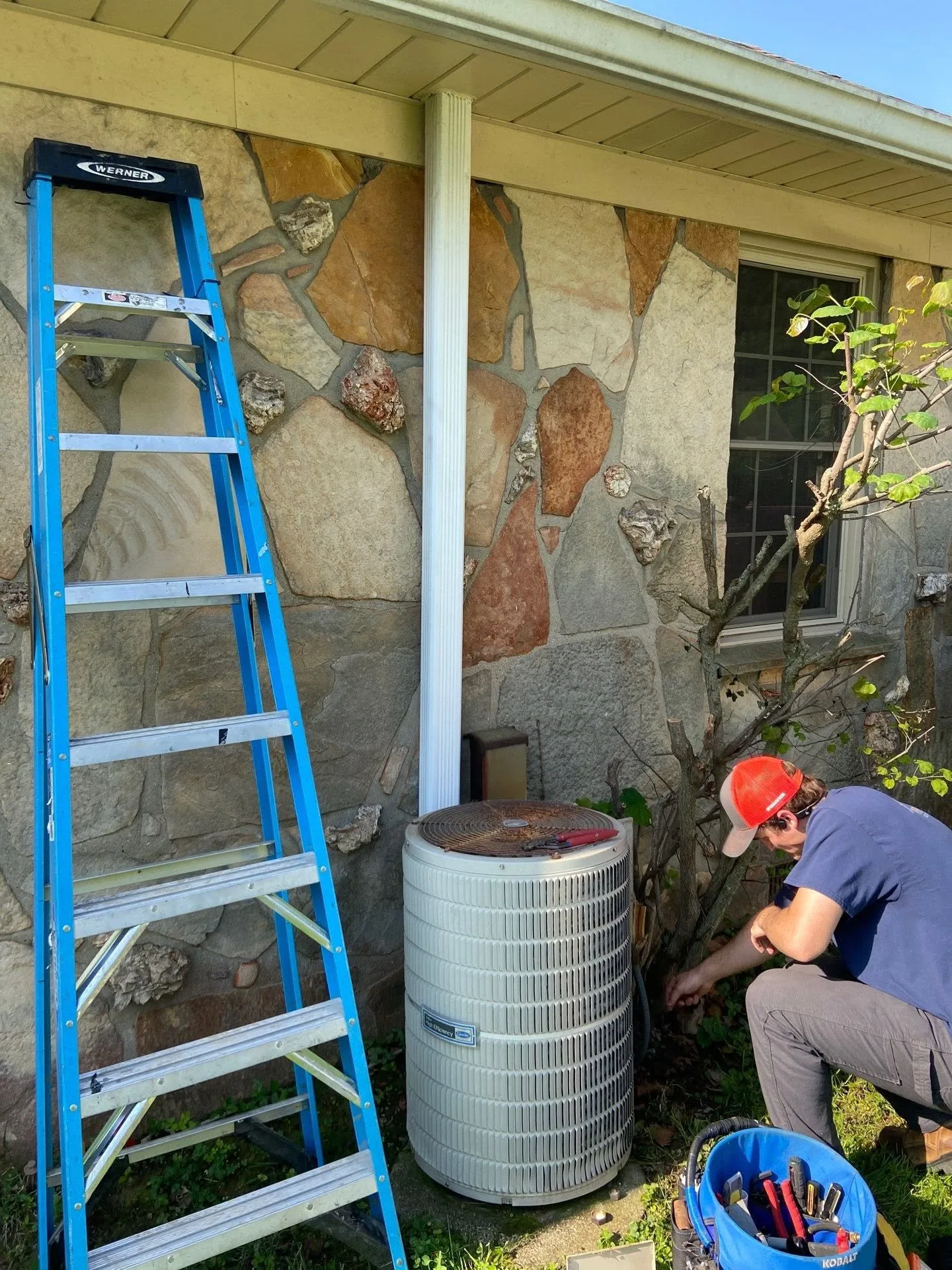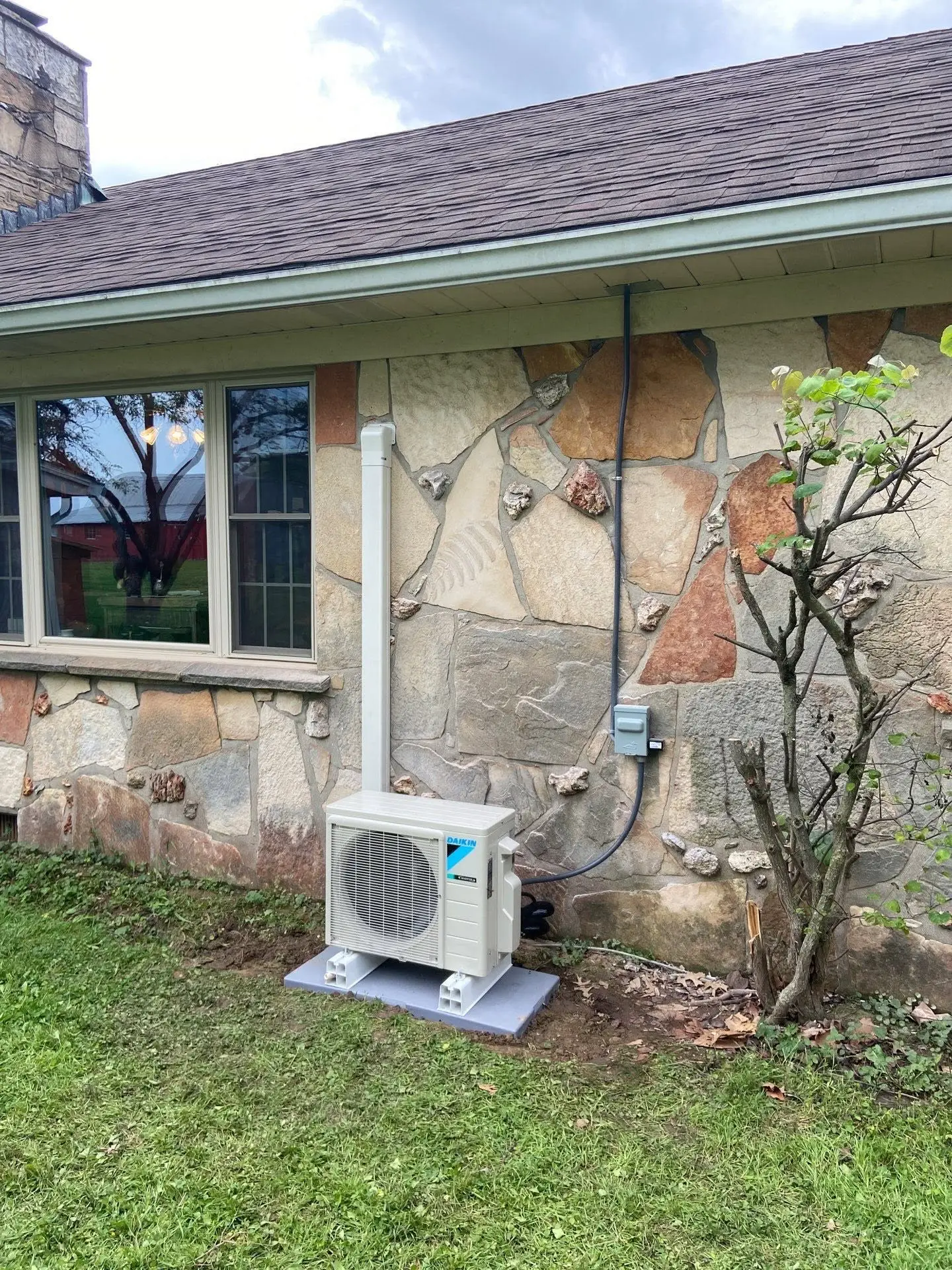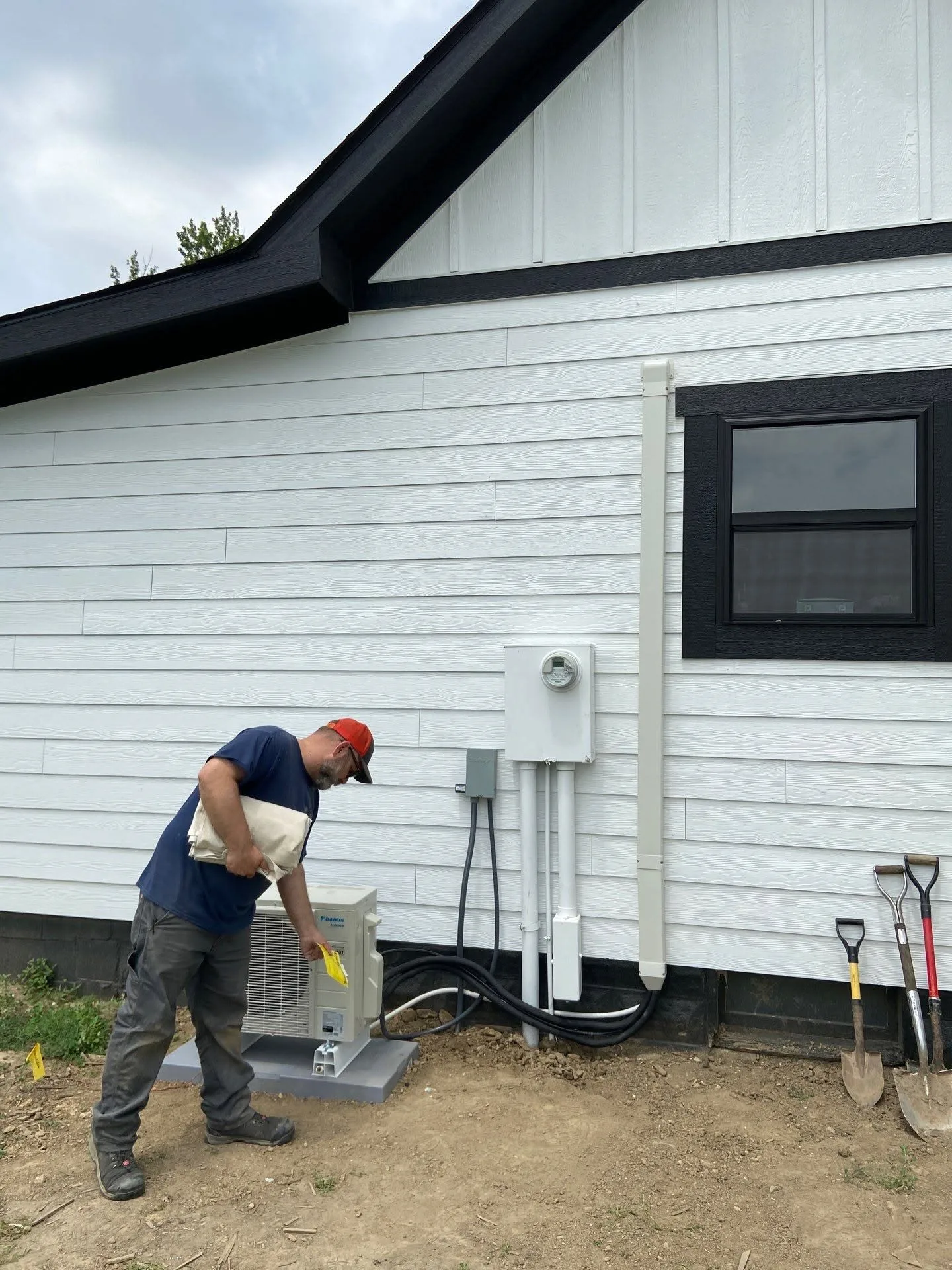
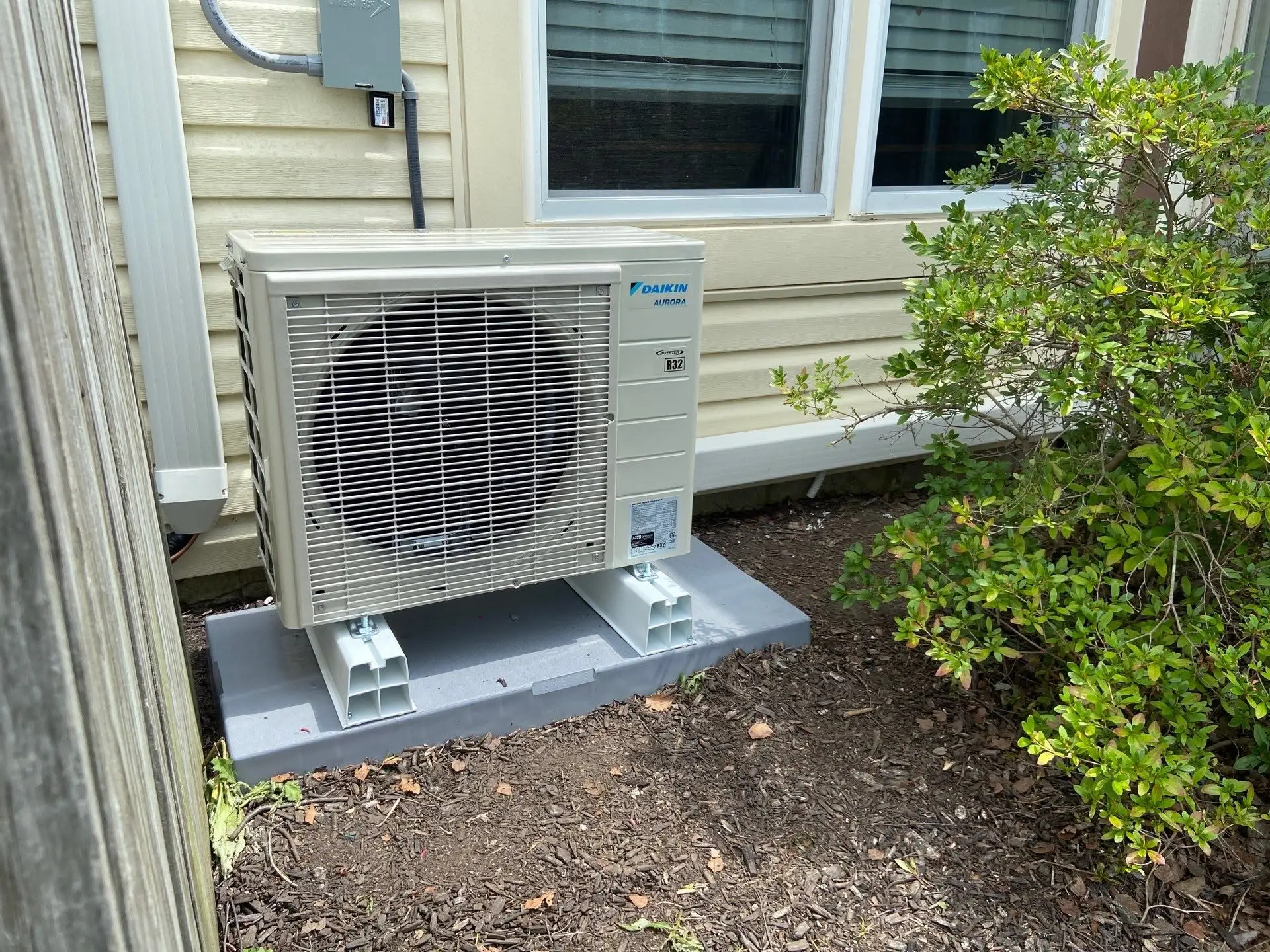
A mini split for garage heating and cooling is the practical way to make a garage usable year round in Plainfield and across Hendricks County, Indiana. Polley's Perfect Seasons puts a single wall head in the garage, sets a small condenser outside, and leaves you with a space that holds 65 degrees while it is 10 degrees on the driveway. No duct from the house, a 10 year parts and 3 year labor warranty on the entry level system, and electrical handled separately by a licensed electrical contractor.
Sizing a garage that is barely insulated
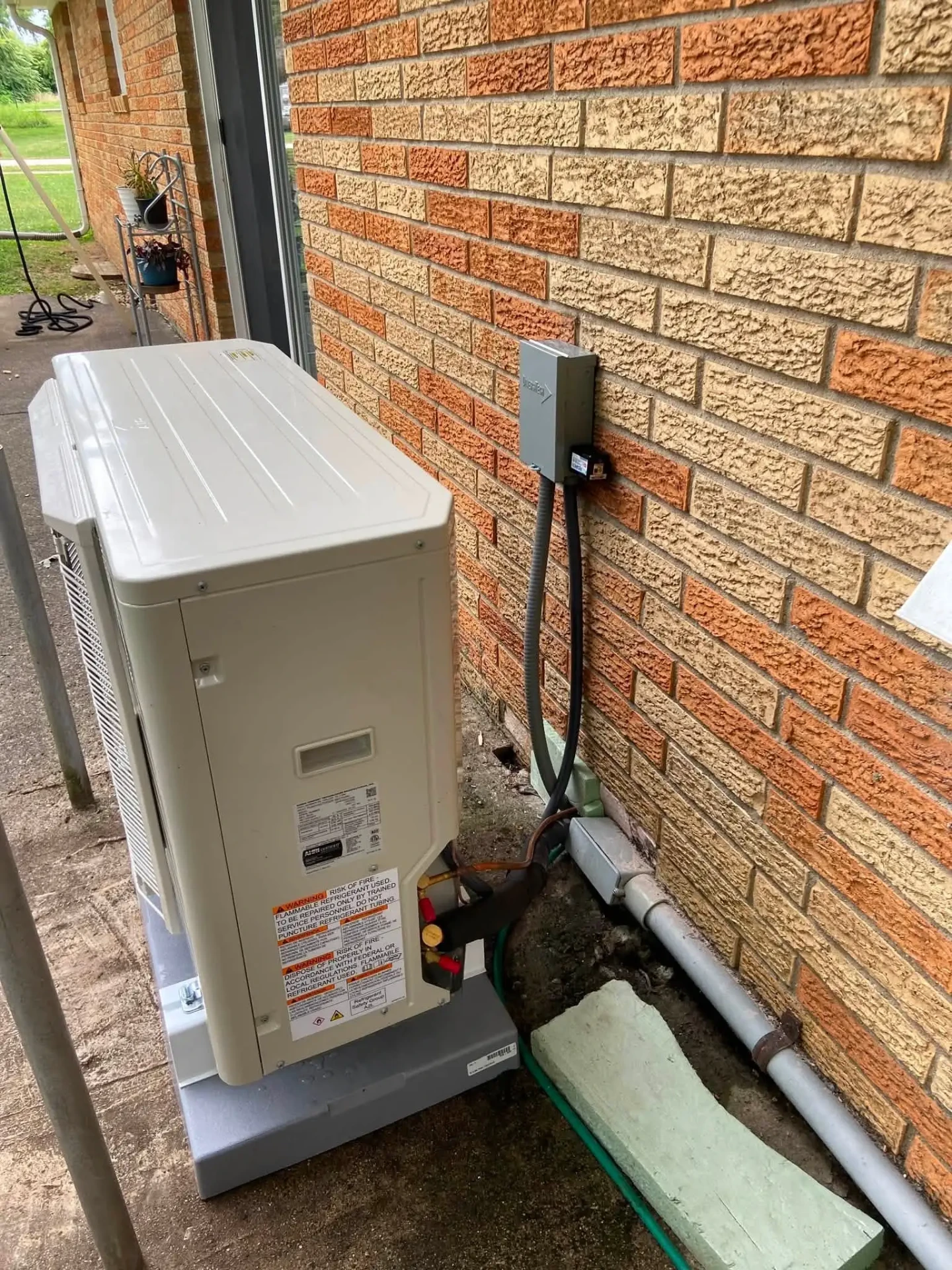
Garage sizing has almost nothing in common with bedroom sizing. A bedroom is wrapped in conditioned space. A garage has a slab that sits on cold ground, an overhead door that is often the single worst insulated surface on the property, and in many Hendricks County homes, bare stud bays on at least one wall.
Rough numbers we start from before we measure:
- Insulated two car garage, roughly 400 to 500 square feet: 12,000 BTU is usually enough.
- Uninsulated or partly insulated two car garage: expect 18,000 BTU, sometimes more if the ceiling is open to the rafters.
- Three car or deep garage past 700 square feet: 18,000 to 24,000 BTU, and door orientation starts to matter.
We size on the heating load, not the cooling load. In central Indiana the winter number is always the larger of the two for a garage, and a unit picked for August will disappoint you in January.
Will it actually hold heat through an Indiana winter?
Cold climate ductless equipment still makes usable heat down around 5 degrees Fahrenheit, and central Indiana only spends a handful of nights below that in a typical winter. Capacity does fall as it gets colder, which is the part sales sheets gloss over. A unit that produces 18,000 BTU at 47 degrees might produce closer to 11,000 at 5 degrees. Size for the cold end and the garage stays comfortable on the days you actually notice.
The same low ambient behavior applies to whole house heat pumps, and we get into the balance point math on our heat pump repair and installation page if you want the longer version.
Workshops, home gyms, and cars that live inside
What you do in the garage changes the target temperature more than the equipment. A woodshop wants 60 to 65 degrees so glue and finish cure correctly, and it wants the filters cleaned monthly because sawdust loads them fast. A home gym wants 62 degrees and strong cooling in summer, since a workout in a 95 degree garage ends early. Stored cars and hobby restorations mostly want the space above dew point so condensation stops forming on cold metal every time the weather swings.
Set the head to hold a floor temperature all winter rather than heating from 35 degrees each time you walk out there. Recovering a cold slab takes hours. Holding a warm one costs very little.
Mounting the head and dealing with condensate
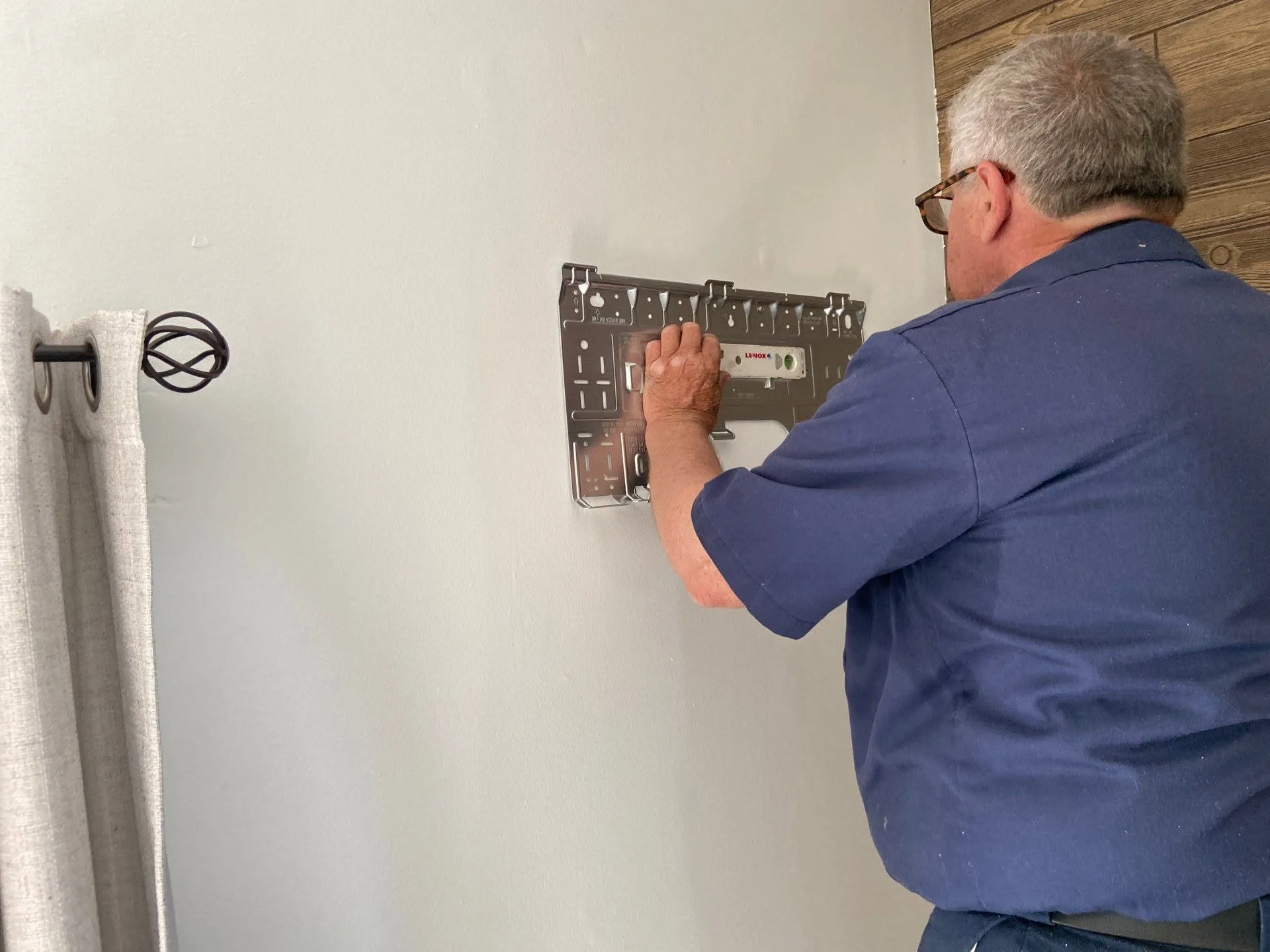
Head placement in a garage has to respect the overhead door track, the opener rail, and anything you plan to hang on the walls later. We usually land on the wall opposite the doors, high, blowing across the bay rather than into a parked vehicle. On garages with an open ceiling, a floor mounted unit sometimes works better because heat sitting at the peak does nobody any good.
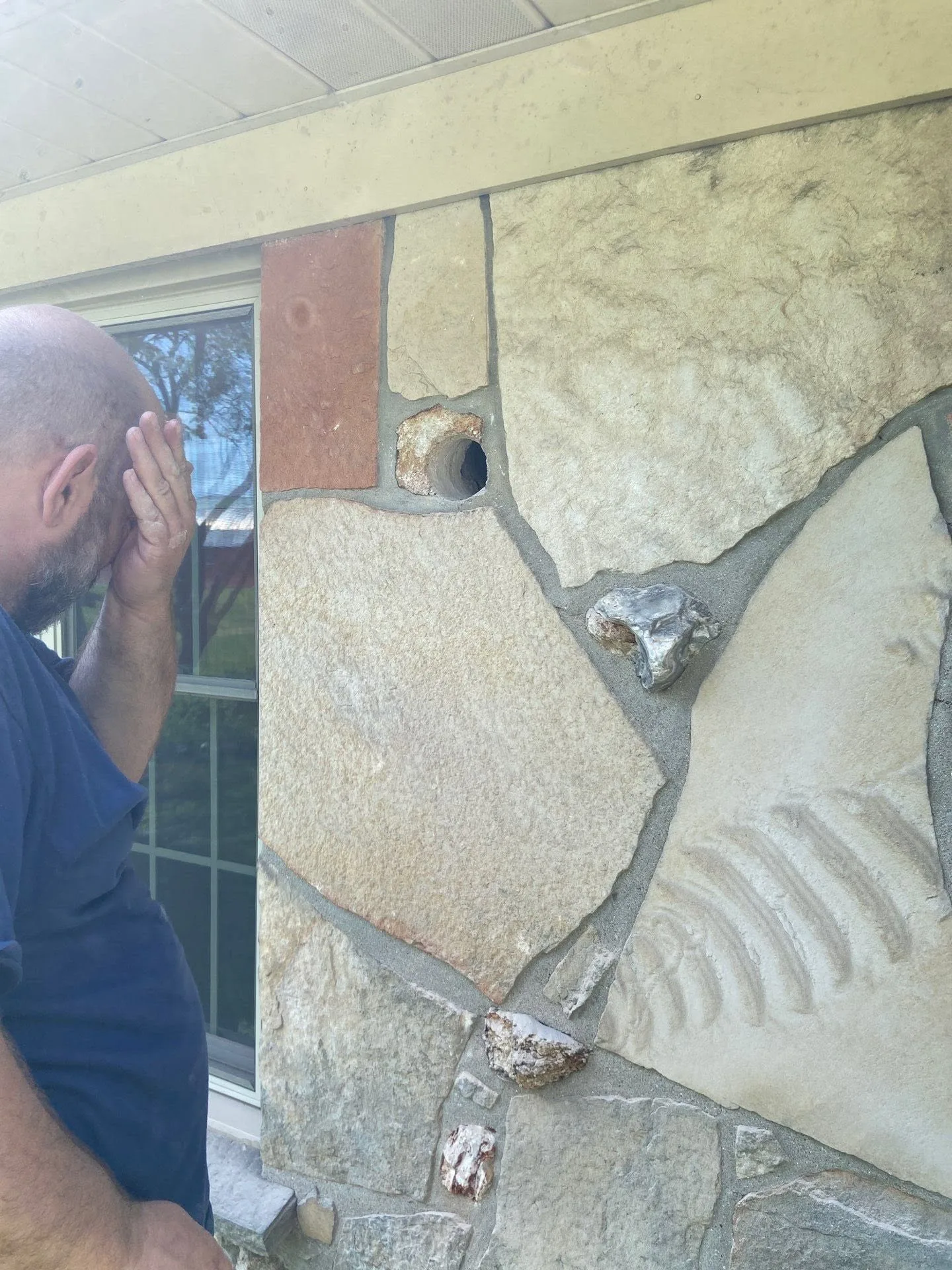
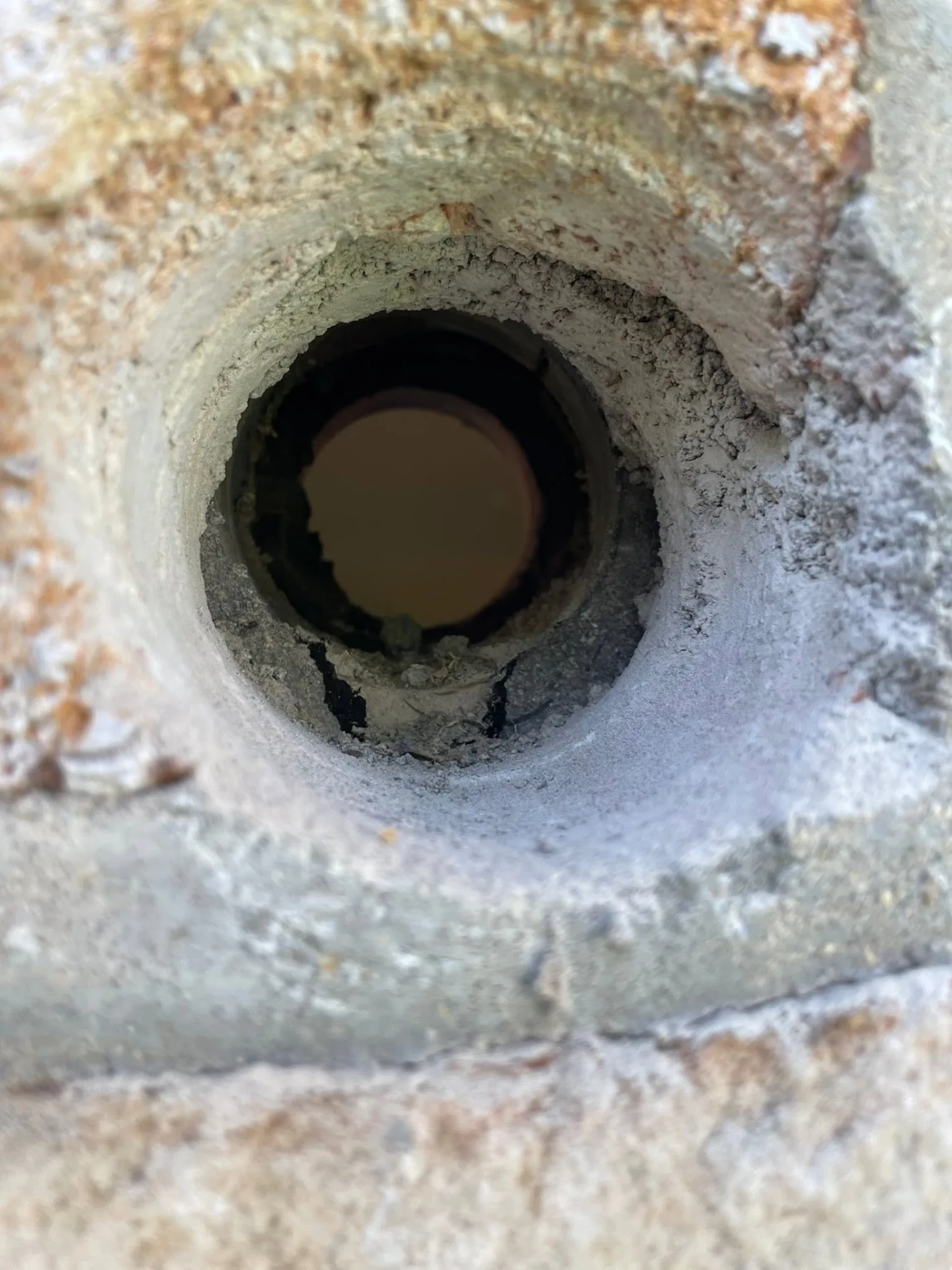
Condensate is the detail that separates a clean garage install from a callback. In cooling mode the indoor head produces water, and a garage rarely has a floor drain where you want one. Most of the time we gravity drain straight through the exterior wall behind the unit. When the grade will not cooperate, we add a small condensate pump. Either way it gets solved on install day, not left for you to notice in July.
Electrical is the other garage specific item. Plenty of garages have one lighting circuit and a couple of receptacles, which will not carry a mini split. A dedicated circuit gets included in your quote up front.
Why space heaters and window units keep failing out there
A 1,500 watt electric space heater is capped at roughly 5,100 BTU. That is less than half what an uninsulated two car garage needs on a cold morning, which is why the heater runs nonstop and the space never warms up. Propane salamanders put out plenty of heat but dump moisture and combustion byproducts into a closed garage, and they are not something to leave running unattended.
Window air conditioners fail for a different reason. Garage windows are small, often fixed, and rarely positioned where the air needs to go. A ductless head handles both jobs from one piece of equipment, runs off a thermostat setpoint instead of a knob, and does not have to be dragged out and stored every fall.
Warranty coverage
The $3,995 entry level system carries a 10 year parts and 3 year labor warranty. Step above the entry level tier and coverage becomes 12 year parts and 3 year labor. Electrical is separate, provided by a licensed electrical contractor.
Other spaces we condition with ductless
- Ductless mini split installation pricing and equipment for the $3,995 starting price, tonnage and tier levels, and warranty terms.
- Sunroom heating and cooling with ductless mini splits
- Bonus room heating and cooling above the garage
FAQ
Garage mini split questions
What homeowners in Plainfield, Avon, and Brownsburg ask before we quote a garage.